Beyond the Boundary Rope: The Harrogate Volunteers Who Make Matchday Happen
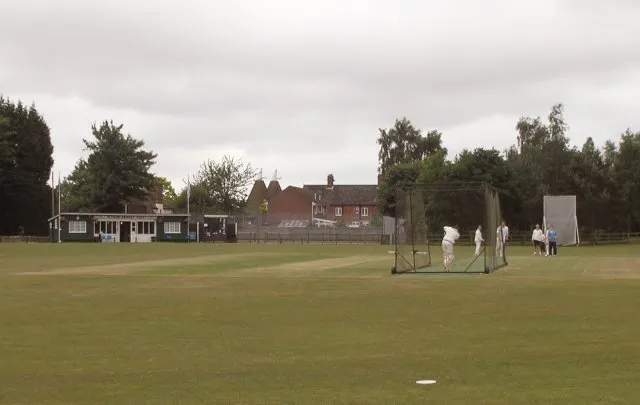
Photo: Warecricket, CC BY-SA 3.0, via Wikimedia Commons
A cricket match looks simple from the boundary: twenty-two players, a ball, two sets of stumps. Up close, it is a small operation with a long list of jobs. Someone has to mark the square, put the covers on, make the teas, keep the scorebook, stand as umpire, coach the colts and rearrange the fixture when the weather turns.
Those jobs are usually done by people who would rather not be in the spotlight. At Harrogate CC Hub, we think they deserve a mention. So we asked around the local clubs and put together a small gallery of the volunteers who keep the game going — not a full team, but a starting XI of the roles that make matchday possible.
Jenny, the scorer who trusts the book
Jenny has been scoring at her club for longer than some of the players have been alive. Her kit is a pencil case with more compartments than a tackle box, and she has a rule: the book never lies, but it sometimes needs a second opinion.
Her favourite matchday story involves a disputed boundary count. The players were sure the total was one thing; the book said another. Jenny calmly produced her notes, walked both captains through the last five overs, and settled it without anyone losing their temper. 'It is not about being clever,' she says. 'It is about writing down what actually happened.'
Scorers are often the first to arrive and the last to leave. If you fancy learning, clubs are usually desperate for help. You do not need to have played the game. You just need to concentrate and enjoy a bit of quiet detective work.
Dave, the umpire with two counters and a spare glove
Dave took up umpiring after his knees told him fielding was no longer a sensible idea. He now stands most weekends, fingerless gloves in cold weather, a small notebook in his pocket and a quiet word for nervous young bowlers.
The notebook is not for complaints. It is for interesting dismissals. He likes to jot down a particularly good catch or a clever stumping so he can remember it later. 'You see things from the middle that you miss on the boundary,' he says. 'The game looks different up close.'
Umpiring can feel intimidating, but every club needs more people willing to give it a go. Training is available, and most leagues are crying out for officials. If you know the basics and can stay calm when a bowler appeals optimistically, you are already halfway there.
Brian, the groundsman who talks to the roller
Brian is the kind of groundsman who knows every patch of the square personally. He mows in stripes, frets about the weather, and has been known to spend twenty minutes before a cup tie coaxing a damp patch back to life with a leaf blower and a lot of optimism.
His quirks are legendary at the club. The roller has a name. The covers have a system. And if you walk across the square in the wrong place, you will hear about it — politely, but firmly.
Groundskeeping is one of the most valuable volunteer roles in local cricket. It is also one of the most invisible. If you have a few hours a week and an interest in how a pitch is prepared, ask your local club whether they need a hand. Brian would probably appreciate the company, even if he does not say so.
Sandra, the tea-maker who feeds the whole ground
Sandra runs the tea hatch with the efficiency of a small restaurant. The urn has a name — Old Reliable — and the sandwiches are cut in triangles because, as she says, 'it makes them taste better.'
Her best story is about a late fixture switch that left the club with forty hungry players and twenty minutes' notice. She raided the freezer, called two neighbours, and somehow produced a full tea that nobody complained about. 'You learn to improvise,' she says.
Tea-making is not glamorous, but it is the heartbeat of a Saturday. It is also a brilliant way to get involved if you want to help without standing in the middle of a cricket match. Clubs need people for a rota, not a lifetime commitment. Two hours on a Saturday can make a real difference.
Priya, the junior coach with a box of spare gloves
Priya coaches the colts on Friday evenings. She has a box of spare gloves, a seemingly endless supply of patience and a talent for making the least confident child feel like they belong.
Her favourite moment this year was watching a kid who could barely hold a bat at the start of the summer hit their first proper shot in a match. The whole team celebrated like they had won a final. 'That is why you do it,' she says. 'Not for the ones who are already good. For the ones who are just finding out they can be.'
Junior coaching is rewarding but clubs always need more helpers. You do not need to be an ex-professional. You need enthusiasm, a bit of common sense and a willingness to learn the safeguarding basics. The kids will supply the energy.
Alan, the fixture secretary who knows every league rule
Alan is the person everyone rings when the weather turns. He has a spreadsheet for everything, a phone that never stops buzzing, and a memory for league rules that borders on the supernatural.
His matchday story is the time he rearranged a fixture at 9pm the night before, found a willing opposition, sorted the umpires and still turned up with a flask of coffee and a copy of the handbook. 'It is just problem-solving,' he says. 'With cricket attached.'
Fixture secretaries are the glue of local leagues. It is an admin-heavy role, but it suits anyone who likes organising, solving puzzles and having a quiet word with the league when needed. If that sounds like you, your club would probably bite your hand off.
How you can get involved
Volunteering at a Harrogate cricket club does not have to mean committing every weekend. Clubs need help with scoring, umpiring, teas, ground care, junior coaching, fundraising, social media and fixture admin. Some roles are seasonal; some are just a couple of hours here and there.
If you are interested, start by speaking to your local club. Most have a volunteer coordinator or secretary who can point you in the right direction. You do not need experience for many roles — training is often available, and the best volunteers learn as they go.
And if you are already one of the people who puts the covers on, sharpens the pencils and boils the urn, thank you. The scorecards may not always show it, but the game would not happen without you.