Borrowed Pads, £40 Bats and the Committees Holding Grassroots Cricket Together

Photo: second hand cricket bats and pads stacked in club pavilion kit swap, via www.tvguide.com
The text that goes round a club WhatsApp group every August tends to say something like this: anyone got a pair of size five pads going spare? What follows is not a shopping recommendation. It is a small, unglamorous act of redistribution, and it is the reason a lot of children in the Harrogate district are still playing cricket in 2026.
Grassroots cricket has never been free, but the arithmetic has tightened. A decent junior bat, pads, gloves, helmet, box and bag can comfortably clear £250 new. Senior subs at local clubs typically sit somewhere between £80 and £150, with match fees on top. Colts' subscriptions are usually lower, but parents are often paying for two or three children at once, plus trainers that get outgrown in a season, plus petrol to a ground six miles out of town twice a week.
None of this is a crisis in itself. It becomes one when a family quietly decides that the second child can wait a year, or that the Saturday player in his twenties will skip the season to save the money. Clubs know it. Which is why so much of the work happening in Harrogate's pavilions right now is about cost rather than cricket.
The garage clear-out that turned into a kit library
Several clubs in the area have run a kit swap or kit library this year, and the pattern is remarkably consistent. A plea goes out in late February, bags appear on the pavilion floor in March, and by the first friendly in April the pile has been picked over and redistributed.
"We had a table set up for one morning and it was emptied in about ninety minutes," says one junior coordinator at a Harrogate-area club. "Bats, pads, a couple of helmets, three bags. The stuff people were holding on to because it felt wasteful to throw away turned out to be exactly what a family down the road needed."
The important detail is what happens next. The good schemes do not just give kit away. They log it. A club with a written list of what it holds — three pairs of small pads, two size-four bats, a left-hander's glove — can answer that August WhatsApp message in a minute rather than a week. It also means the equipment comes back at the end of the season instead of vanishing into a shed.
Colts' subs and the quiet subsidy
Very few clubs advertise the fact that they help families out. They should probably say it louder, because a parent who does not know a subsidy exists will simply stop replying to the group chat.
The mechanisms vary. Some clubs run a family membership that covers two or three children for less than the individual rate multiplied out. Some hold a small hardship pot, fed by fundraising or by a senior player who quietly rounds up his subs. Others let parents pay in instalments across the summer, which sounds trivial until you remember that a £90 bill in April lands in the same month as a school trip and a boiler service.
All Stars and Dynamos programmes have helped here too, giving clubs a low-cost, structured entry point that brings in families who have never been near a cricket ground. The trick, several coaches say, is converting those eight weeks into a full season — and that conversion almost always comes down to whether the club can lend kit and keep the first year cheap.
Sharing the expensive stuff
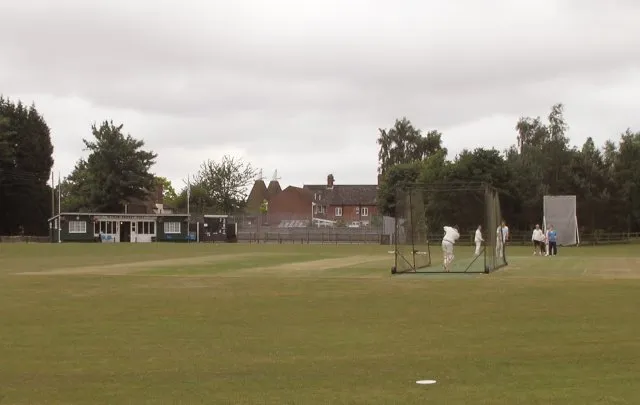
Kit for players is only half the bill. The equipment that a club cannot do without — mowers, covers, roll-on nets, sight screens, a decent roller — is where the real money sits, and where the district has quietly got smarter.
Groundsharing and equipment loans between neighbouring clubs have become noticeably more common. A set of covers that fits one square usually fits another. A mower can make the trip down the road for a fortnight. Several clubs have pooled transport for away fixtures, and junior sides have started travelling together to tournaments rather than in eight separate cars.
It is not glamorous, and nobody puts it in a match report. But a shared mower is a five-figure sum a club does not have to find.
Where the money comes from
Fundraising in 2026 looks less like a raffle and more like a small business. The clubs doing well tend to have two or three reliable income streams rather than one big event: a well-run bar on matchdays, a boundary board or pitch-side sponsor, a summer social that people actually want to attend, and a grant application sent off in good time rather than in a panic in March.
Grants are genuinely available — from Sport England's community programmes, the Yorkshire Cricket Foundation, and local council and councillor funds — but the applications reward clubs that already know what they need. A club that has costed its project before Christmas is in a far better position than one ringing round in April.
Practical advice, if you are the one holding the spreadsheet
- Start the kit appeal in February, not May. People clear out garages in the new year.
- Publish the help. A single line on the membership form — "if cost is a barrier, speak to us in confidence" — does more than most committees realise.
- Give borrowed kit a number and a name. Ownership records prevent the slow leak of equipment.
- Price a family membership, not just an individual one. It removes the maths that makes parents hesitate.
- Cost your projects early. Quotes in the winter, applications in the spring.
- Ask the senior players to fund one colts' place. They usually say yes.
What is still hard
Nobody in the district pretends this is solved. Pitch hire, league fees, insurance and the cost of a decent tea all keep climbing, and volunteer hours are the scarcest resource of all. A kit library only works if somebody is willing to run it, and the same six people are usually already running the colts, the ground and the social media.
But the direction of travel is encouraging, and it is encouraging for a reason worth saying out loud: the game in Harrogate is being kept open by people making small, practical decisions. A bag of pads left on a pavilion table. A family rate on a membership form. A mower doing two grounds instead of one.
None of it makes a highlights reel. All of it keeps a child in the nets for another summer.